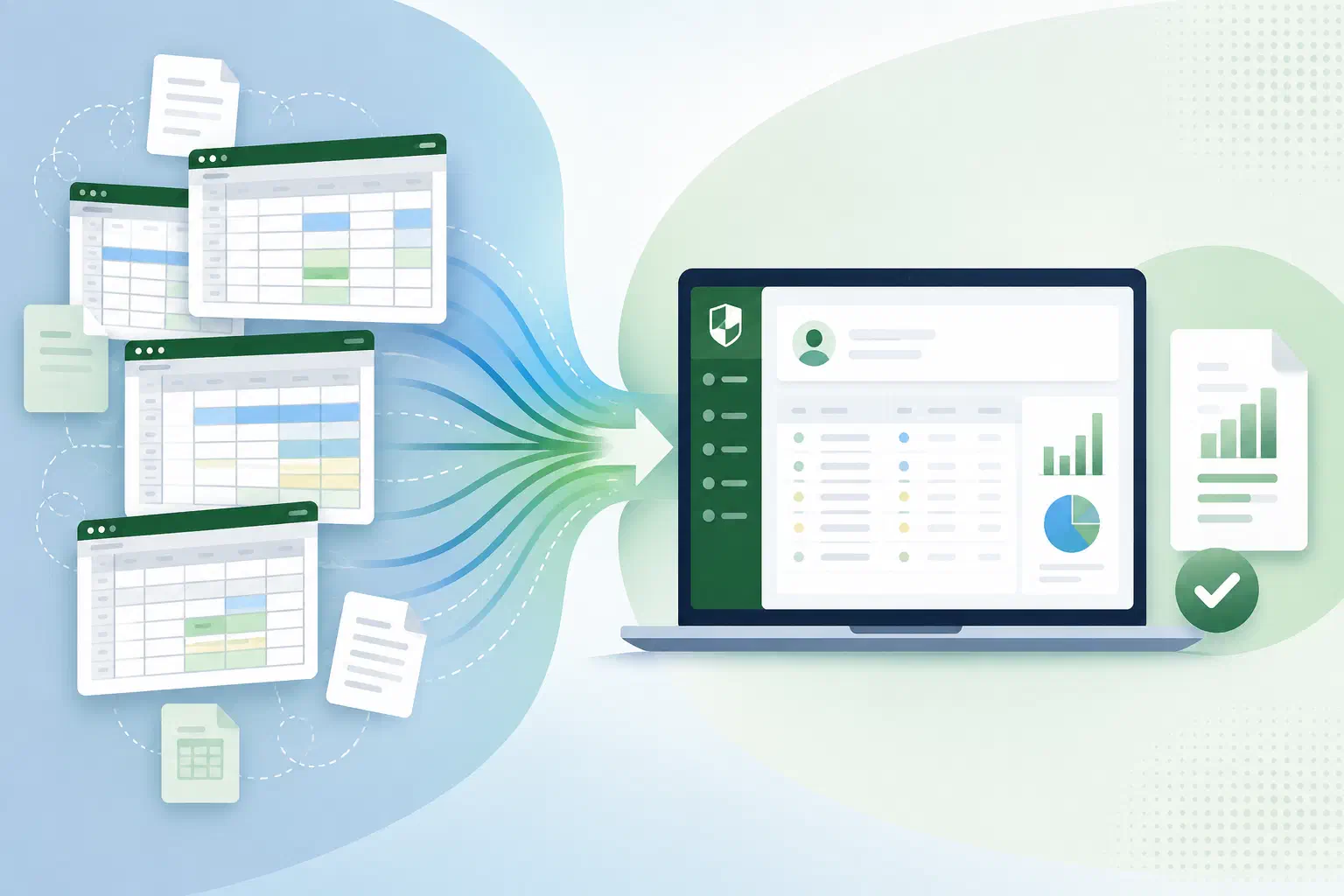
Spreadsheets are a familiar way to collect and organize faculty activity information. For a small department or simple reporting process, they may work well enough.
The problem is that faculty activity reporting often becomes more complicated over time. More faculty members contribute information, departments need different reports, and the same information may be needed for annual reporting, faculty profiles, program reviews, or accreditation.
At that point, maintaining faculty activity information across spreadsheets can become a significant administrative burden.
Why Spreadsheets Become Difficult to Manage
When faculty activity reporting depends on spreadsheets, administrators may spend considerable time collecting information, checking it for consistency, and combining information from multiple sources.
Faculty members may also maintain their own records before submitting information to a department or central office. That can lead to duplicate data entry and make it difficult to know whether the most recent information is being used.
The problem is not necessarily the spreadsheet itself. It is the process that develops around it. As more people and reporting requirements become involved, a process that once seemed simple can become difficult to maintain.
Keep Faculty Information Up to Date
One of the biggest challenges with spreadsheet-based reporting is keeping information current.
If faculty members are asked to submit their activities once or twice a year, they may have to reconstruct months of activity at reporting time. Publications, presentations, professional development, service, teaching activities, and other contributions can be easy to overlook.
A centralized faculty activity reporting system changes the timing of the process. Instead of waiting for a reporting deadline, faculty members can maintain their activities throughout the year, creating an ongoing record that can be used whenever information is needed.
This also reduces the need to repeatedly ask faculty members for information they have already provided.
Use One Set of Data for Multiple Needs
Faculty activity information often has more than one use.
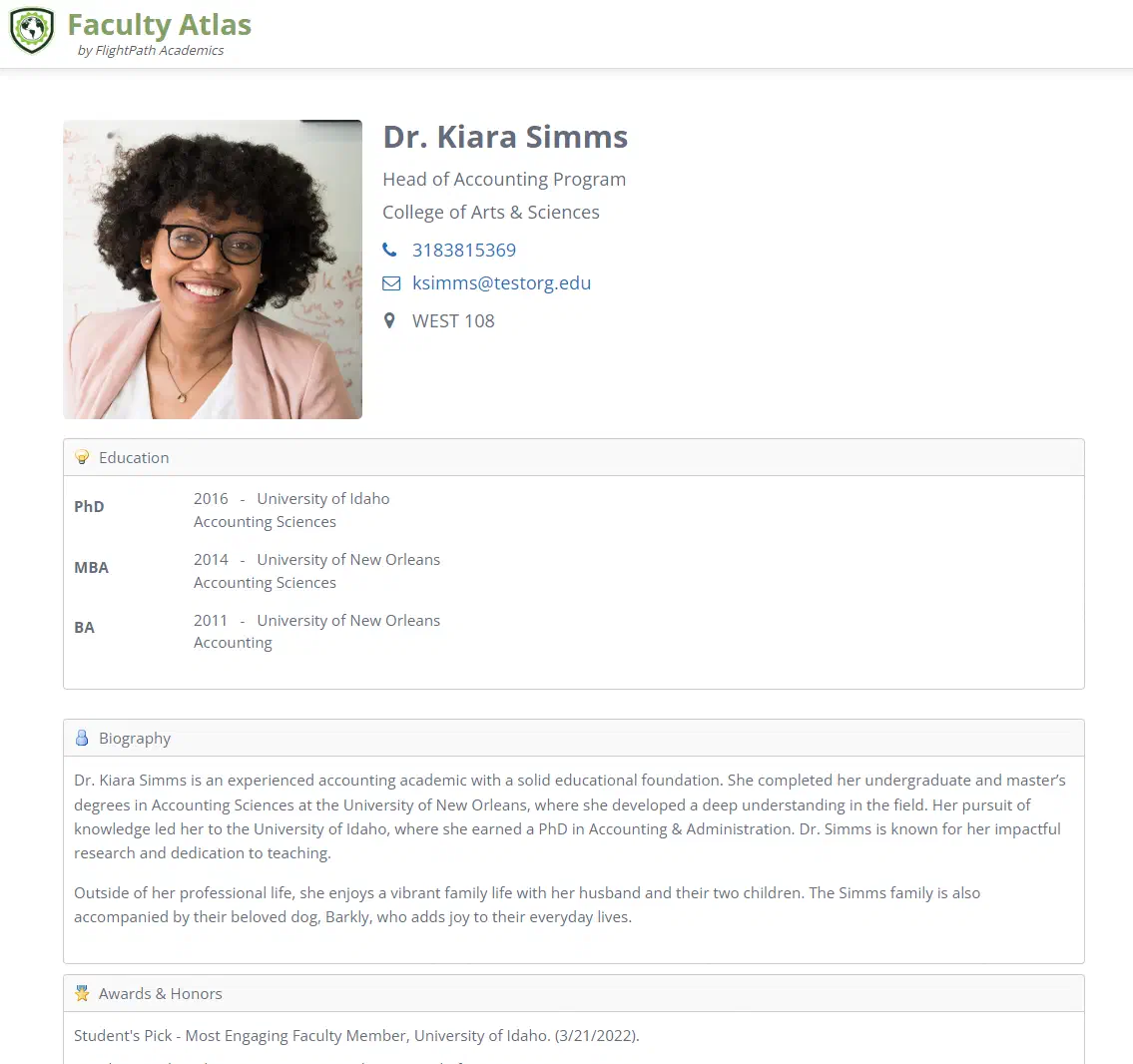
The same publication might be relevant to an annual faculty report, a faculty profile, a program review, and accreditation documentation. When those processes are handled separately, the same information may need to be entered, collected, or reformatted more than once. See what colleges and universities can use faculty activity data for beyond annual reporting.
A centralized system allows the institution to maintain information in one place and use it for different reporting needs.
Departments can access information about their faculty, while authorized administrators can retrieve information across departments or programs. Reports can be created from information that is already organized and available.
If you’re evaluating your options, our guide to what to look for in faculty reporting software covers capabilities that can make this process easier.
Reduce the Accreditation Scramble
Accreditation is one area where fragmented faculty information can create extra work.
When a review approaches, administrators may need to locate faculty qualifications, activities, and supporting information across spreadsheets, documents, and other sources. If information has not been maintained consistently, the institution may first have to determine what is missing before it can begin preparing the documentation.
Maintaining faculty activity information throughout the year provides a better starting point.
The institution still needs to determine what accreditation documentation is required and review the information carefully. But when faculty activities are maintained in a centralized system, much of the underlying information is already available.
Learn more about how faculty activity reporting supports accreditation.
When Is It Time to Move Beyond Spreadsheets?
There is no rule that says every institution needs dedicated faculty activity reporting software. A spreadsheet may be sufficient when the process is small and straightforward.
It may be time to consider a centralized system when:
- Multiple departments are collecting faculty activity information.
- Faculty members are entering the same information in multiple places.
- Administrators spend significant time combining spreadsheets.
- Faculty information is frequently out of date.
- The institution needs the same information for several different purposes.
- Preparing accreditation or other reports requires significant manual effort.
These are signs that the problem may no longer be collecting information. It may be managing the information effectively.
A Better Approach to Faculty Activity Reporting
Moving beyond spreadsheets does not mean making the reporting process more complicated. The goal is to make it simpler for both faculty and administrators.
With a centralized system, faculty members can maintain their activities throughout the year while administrators can access organized information when they need it. The same underlying data can support reporting, faculty profiles, accreditation, and other institutional needs. This ongoing approach also creates opportunities to automate much of the repetitive work involved in faculty activity reporting.
Faculty Atlas provides colleges and universities with a centralized way to collect faculty activities, generate reports, maintain faculty profiles, and support accreditation. Explore Faculty Atlas features to see how a centralized approach can simplify faculty activity reporting.