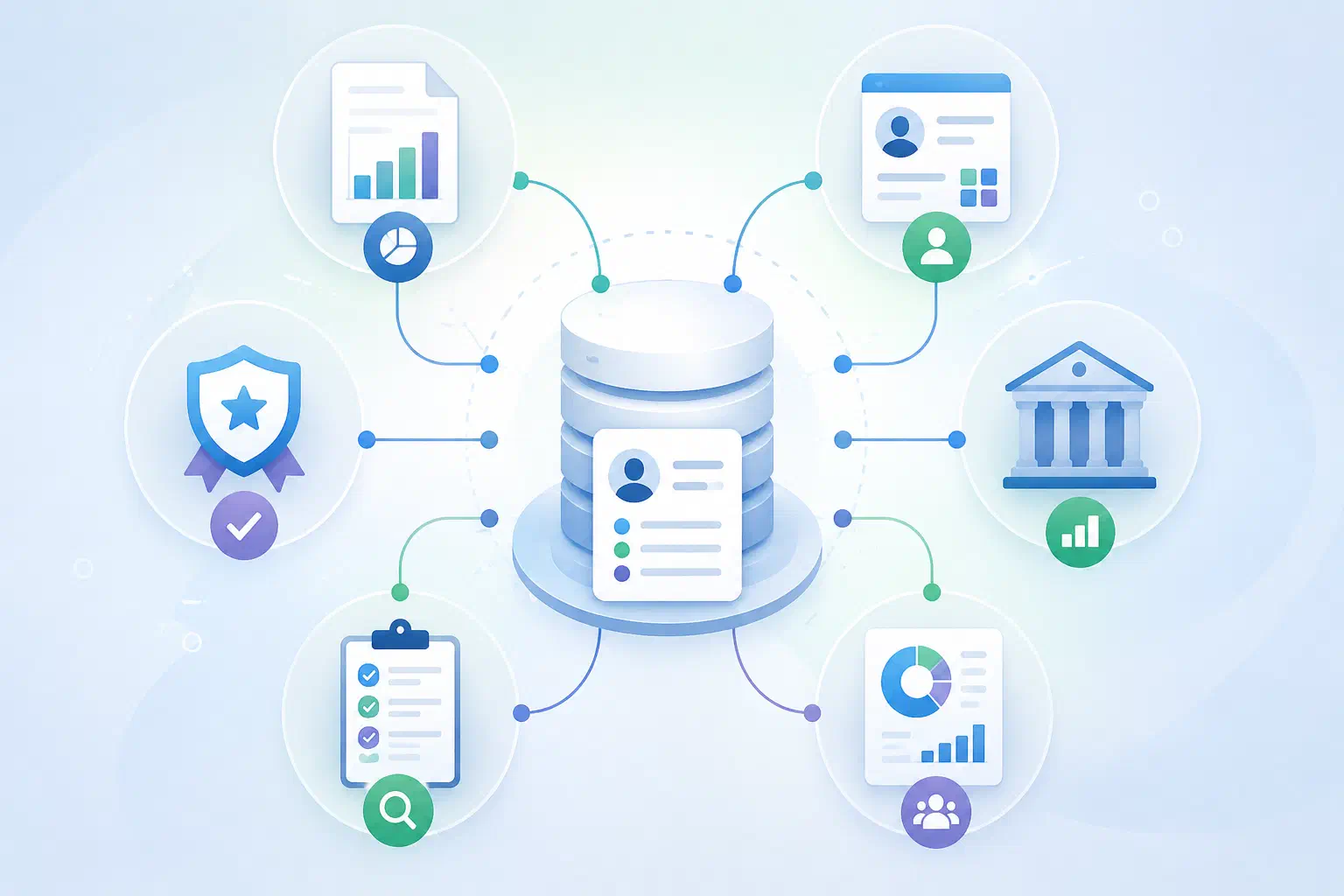
Faculty activity reporting is often thought of as a way to produce an annual report. But the information collected through the process can be useful for much more than that.
Publications, presentations, teaching activities, professional development, service, credentials, and other faculty activities can support a variety of institutional needs.
The key is maintaining organized faculty activity data that can be reused, rather than collecting the same information separately for every reporting requirement.
If you’re new to the concept, our guide to what faculty activity reporting software is explains how colleges and universities use these systems.
Annual Faculty Reporting
Annual faculty reporting is one of the most obvious uses for faculty activity data.
Instead of asking faculty members to recreate their activities at the end of each reporting period, an institution can maintain an ongoing record throughout the year. Faculty members can add activities as they occur, while administrators can retrieve the information needed for annual reports.
This makes the reporting process less dependent on spreadsheets, email, and last-minute information gathering. For institutions still relying on spreadsheets, moving to a centralized process can address many of these challenges.
Faculty Profiles
Faculty activity data can also support faculty profiles and directories.
Information about publications, presentations, professional activities, credentials, teaching, and service can help provide a more complete picture of a faculty member’s work.
When this information is maintained centrally, institutions can avoid maintaining separate records for internal reporting and public-facing faculty information.
Accreditation and Program Reviews
Accreditation is another important use for organized faculty activity data.
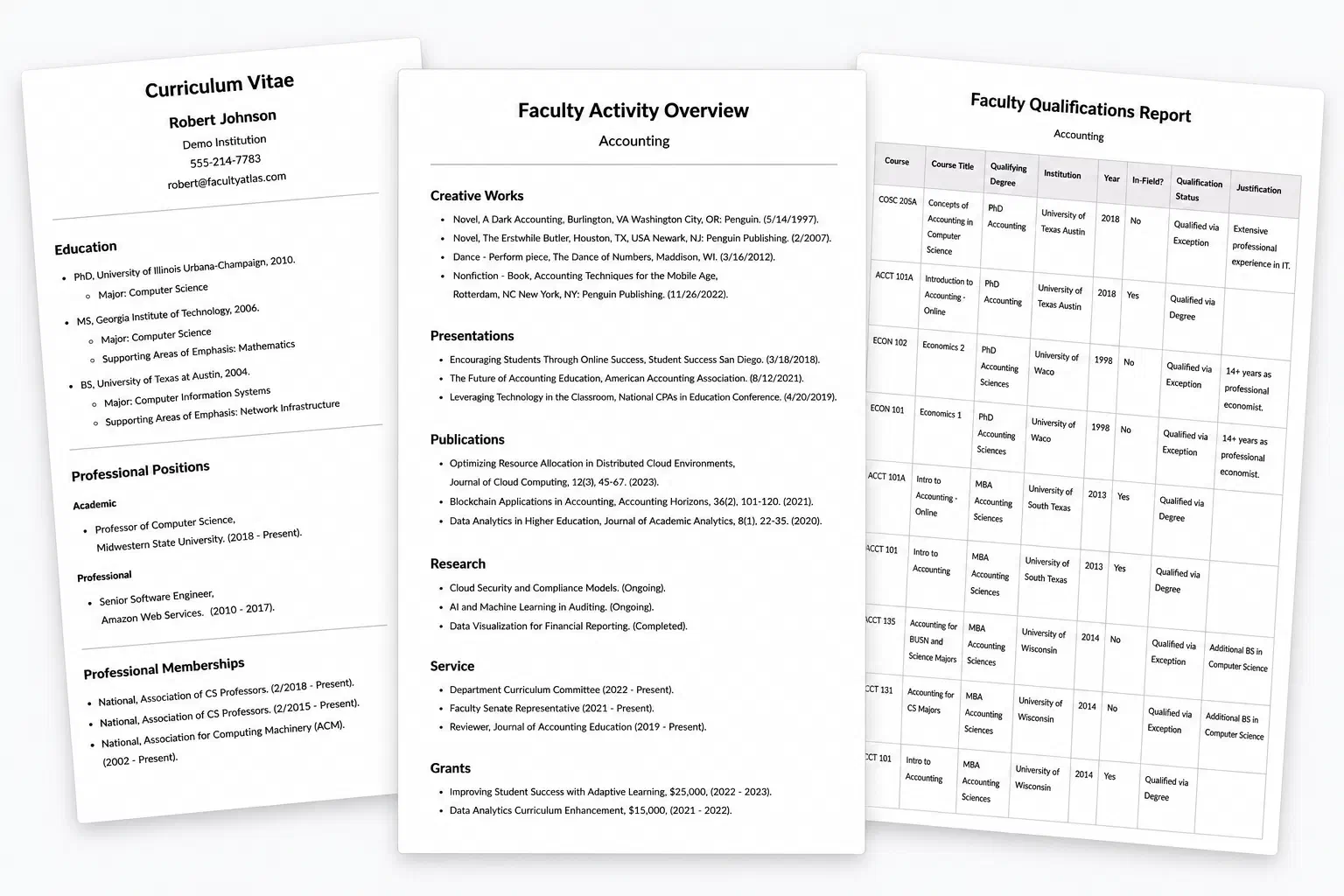
Accrediting organizations may require institutions to document faculty qualifications, professional activity, teaching responsibilities, and other evidence. Program reviews can require similar information at the department or program level.
When faculty activity information is maintained throughout the year, much of the underlying documentation is already available when these reviews begin.
Our article on how faculty activity reporting supports accreditation explores this use in more detail.
Departmental and Institutional Reporting
Faculty activity data can also help administrators answer questions at the department, college, or institutional level.
For example, an institution may need to understand:
- What activities are faculty members participating in?
- What credentials and qualifications are represented within a program?
- What scholarly or professional activities are taking place?
- What information is needed for a departmental or institutional report?
When information is centralized, administrators can work from the same underlying data rather than asking individual departments to assemble separate reports.
Keep Faculty Data Organized
The broader benefit is having a reliable institutional record of faculty activity.
Without a centralized approach, information can become scattered across spreadsheets, documents, email, and individual faculty records. That makes it harder to know what information exists, whether it is current, and where to find it.
A centralized faculty activity reporting system gives faculty and administrators a common place to maintain and access that information.
This also supports the automation described in our article on how to automate faculty activity reporting in higher education.
One Set of Data, Multiple Uses
The most useful faculty activity reporting processes do not collect information simply to produce a single report.
The goal is to maintain information once and use it wherever the institution needs it.
Annual reports, faculty profiles, accreditation, program reviews, departmental reporting, and other administrative needs can all draw from the same underlying faculty activity data.
That makes the information more valuable while reducing the need to repeatedly collect and organize it.
Faculty Atlas provides colleges and universities with a centralized way to collect faculty activities, generate reports, maintain faculty profiles, and support accreditation. Explore Faculty Atlas features to learn how Faculty Atlas can help turn faculty activity reporting into an ongoing institutional resource.