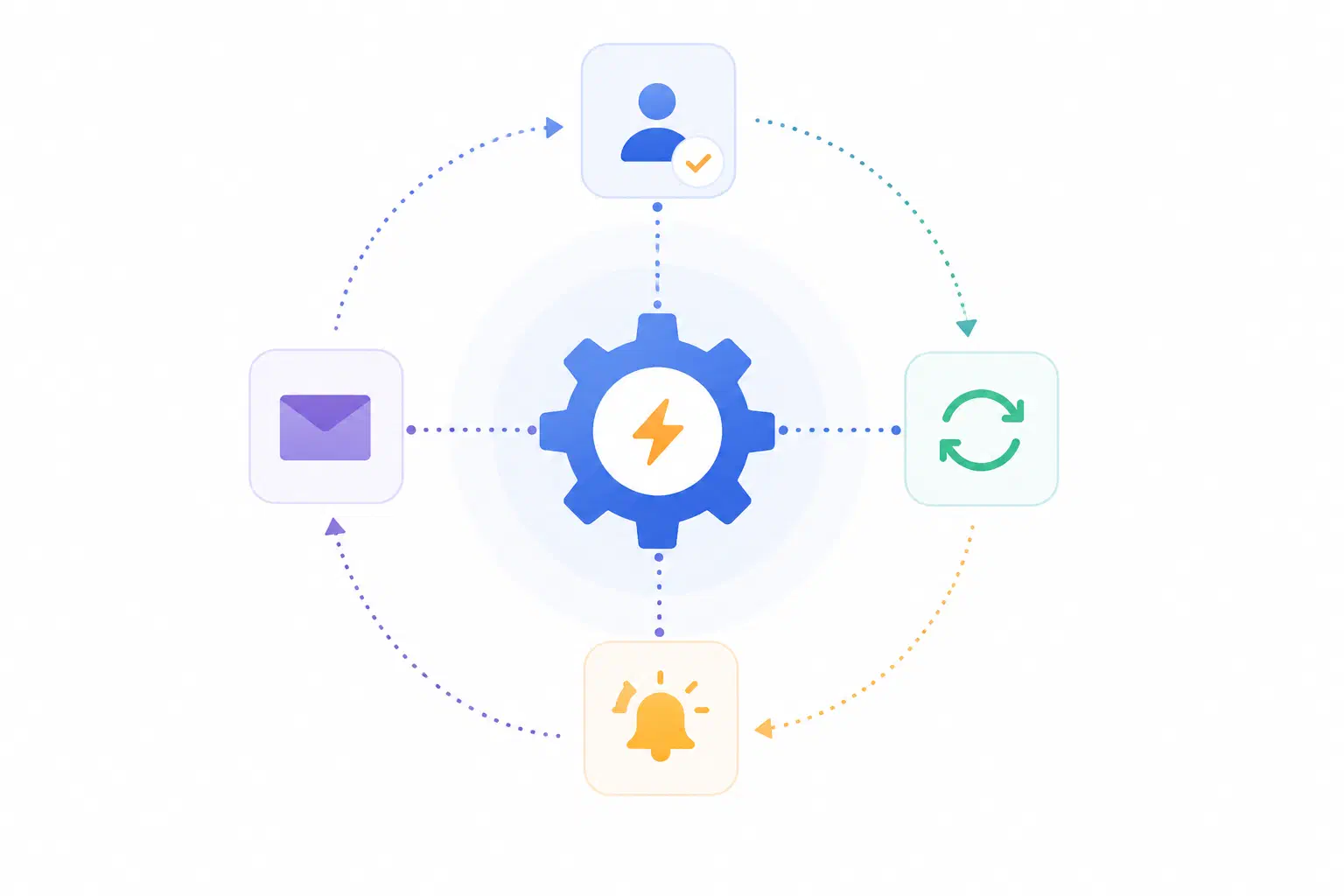
Faculty activity reporting can become a surprisingly manual process. Faculty members may keep their own records, departments may collect spreadsheets, and administrators may have to combine information from multiple sources whenever a report is needed.
A more efficient approach is to treat faculty activity reporting as an ongoing process rather than a recurring administrative project.
Automating faculty activity reporting does not mean eliminating the people involved. It means giving faculty and administrators a centralized system that reduces repetitive data entry, keeps information organized, and makes reports easier to produce.
If you’re new to faculty activity reporting software, our guide to faculty activity reporting software explains the basic concept and how institutions use these systems.
Start With Continuous Faculty Data Entry
The first step toward automation is changing when faculty information is collected.
In a manual process, faculty members may be asked to submit their activities once or twice a year. That can mean recreating information already recorded elsewhere or trying to remember activities from months earlier.
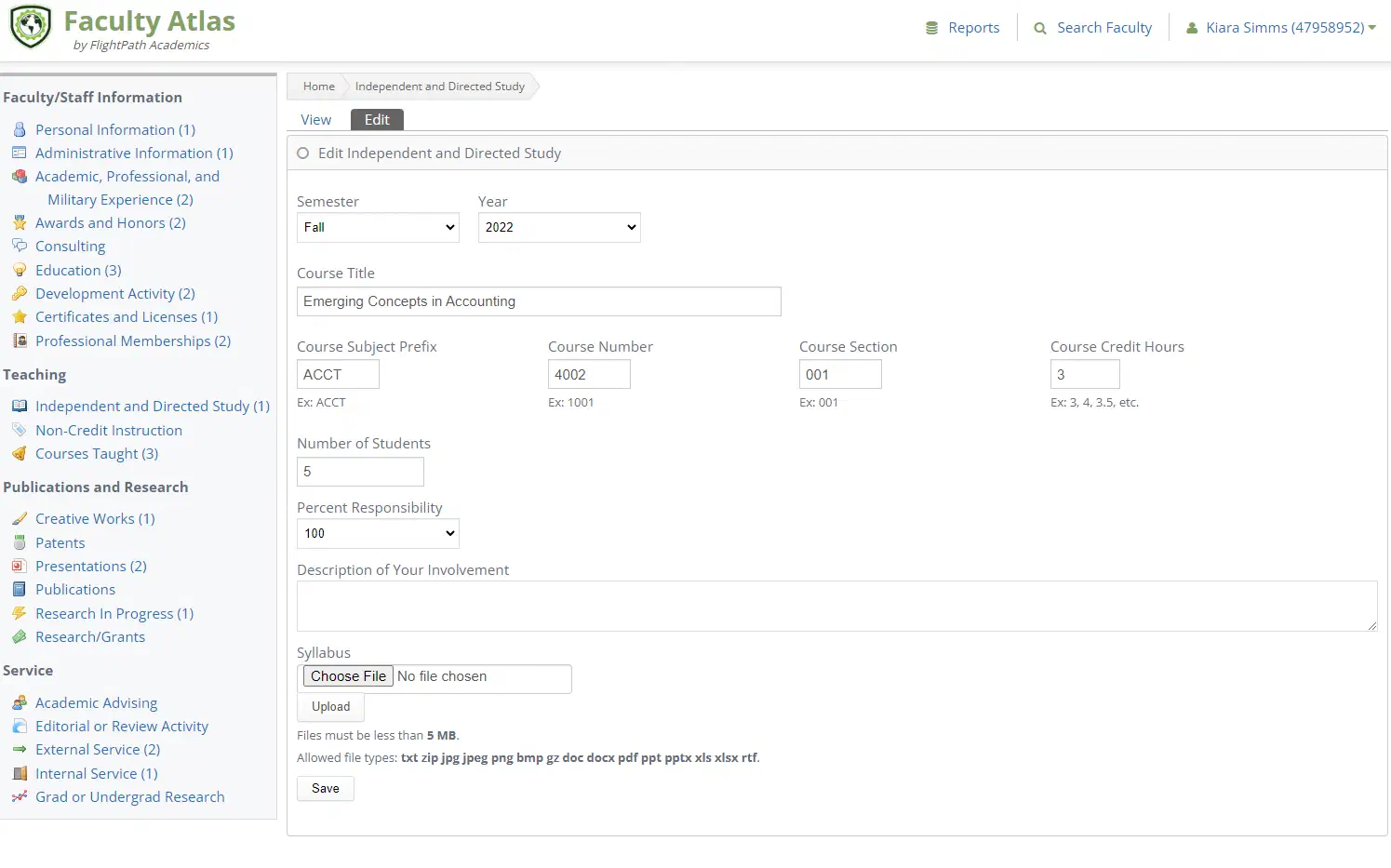
A centralized system gives faculty members a place to maintain their activities throughout the year.
A publication can be added when it is published. A conference presentation can be recorded after the event. Professional development, service, teaching activities, and other contributions can be added as they occur.
Instead of starting each reporting cycle with a blank spreadsheet, the institution builds an ongoing record of faculty activity. This is one of the key differences between a centralized reporting process and spreadsheet-based faculty activity tracking.
Centralize the Information
Automation works best when faculty activity information is stored in one place.
Without a centralized system, administrators may have to collect information from faculty members, department offices, spreadsheets, documents, and other systems. Even when each source is accurate, combining the information can take considerable time.
A centralized faculty activity reporting system provides a common source of information.
Faculty members maintain their own activities, while authorized administrators can access the information they need for reporting. Different departments can use the same system while still maintaining the categories and information appropriate to their work.
This also reduces the need to ask faculty members for the same information repeatedly.
Turn Activity Data Into Reports
Collecting information is only useful if the institution can use it.
Automated faculty reporting should make it easier for administrators to retrieve information and organize it for specific purposes. Depending on the institution, that might include annual faculty reports, departmental reporting, program reviews, faculty profiles, or accreditation documentation.
The important distinction is that the institution is no longer creating each report from scratch.
The underlying faculty activity information already exists. Administrators can retrieve what they need and use it for the reporting task at hand.
When evaluating systems, look for faculty reporting software that can generate useful reports rather than simply collecting information.
Make Accreditation Reporting Easier
Accreditation is one area where a continuous reporting process can make a significant difference.
When accreditation information is collected only when a review approaches, administrators may have to locate faculty qualifications and activities across multiple sources. Information may also be outdated or stored in inconsistent formats.
Maintaining faculty information throughout the year changes that process.
When accreditation documentation is needed, much of the underlying faculty activity information is already available. Administrators can retrieve and organize the information instead of beginning the collection process from scratch.
This does not automate accreditation itself. Institutions still need to determine what documentation is required and review the information carefully. The benefit is that the underlying faculty data is easier to maintain, find, and use.
Learn more about how faculty activity reporting supports accreditation.
What Faculty Activity Reporting Automation Looks Like
A practical automated workflow can be relatively simple:
- Faculty members maintain their activities throughout the year.
- Activities are stored in a centralized system.
- Administrators can retrieve information across faculty, departments, or programs.
- Reports are generated from the information already in the system.
- The same underlying data can support multiple institutional needs.
The result is not necessarily a completely hands-off process. Instead, automation removes much of the repetitive work involved in collecting, organizing, and recreating faculty activity information.
Moving From Manual Reporting to a Better Process
The best place to start is by looking at the current reporting process.
Where is faculty activity information stored? How often is it updated? How many times do faculty members enter the same information? How much time do administrators spend combining spreadsheets or preparing reports?
Those questions can reveal where automation would provide the most value.
Faculty Atlas gives colleges and universities a centralized way to collect faculty activities, generate reports, maintain faculty profiles, and support accreditation. Explore Faculty Atlas features to see how the platform can help replace fragmented faculty reporting processes with an ongoing system for managing faculty activity information.