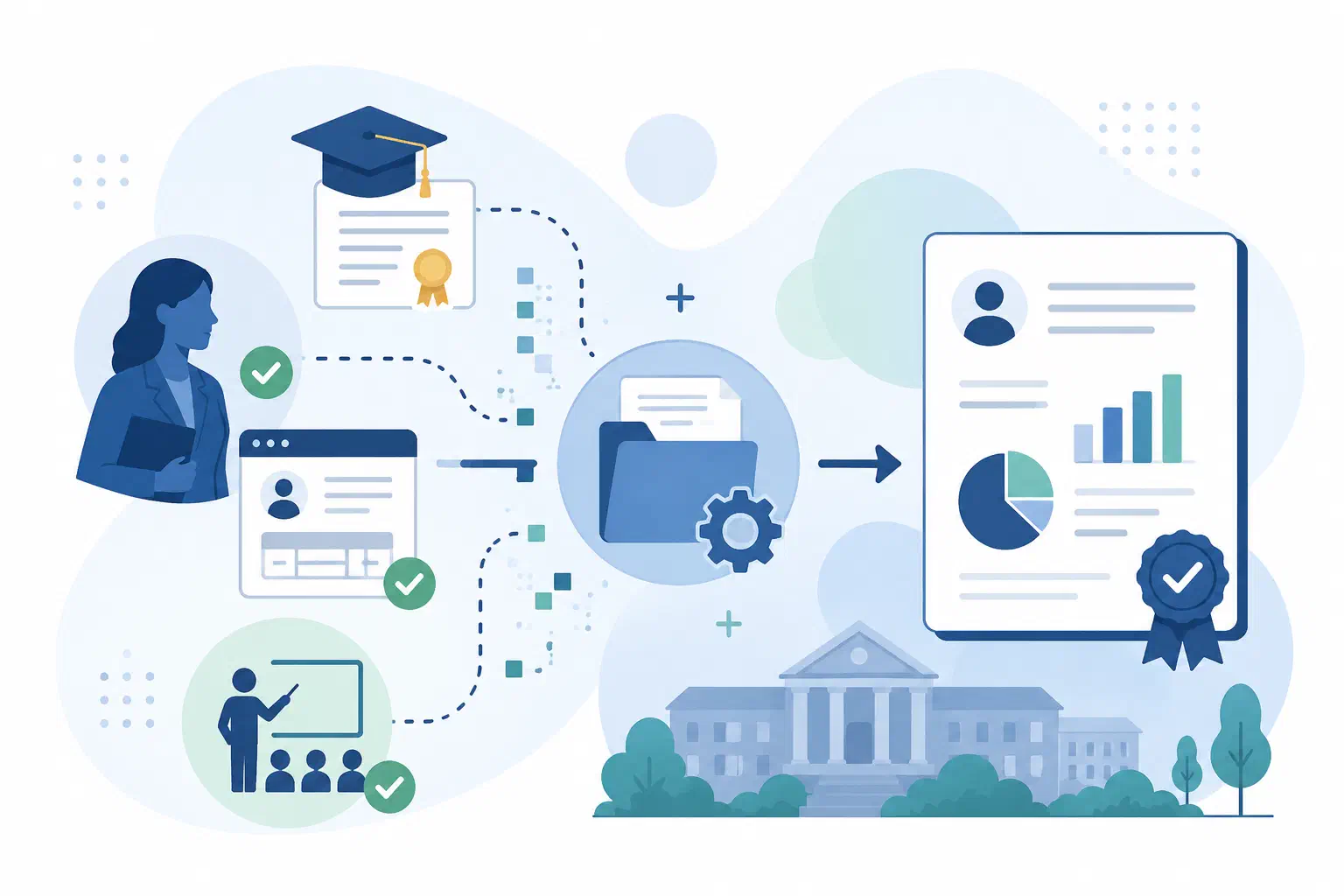
Preparing for accreditation often means bringing together information that already exists across a college or university.
Faculty members may maintain their educational qualifications and professional experience, while course assignments may come from the student information system. When accreditation reporting begins, administrators may have to bring that information together and determine which faculty members and courses need to be included.
Faculty activity reporting software makes this process much more manageable. Instead of collecting information only when an accreditation review approaches, institutions maintain faculty information throughout the year and use that same information to generate reports when it is needed.
This approach automates more of the faculty activity reporting process.
Connect Faculty Qualifications With Courses Taught
One useful application is connecting faculty qualifications with the courses they teach.
Faculty members maintain their educational information, including degrees, institutions, and years earned. Faculty members enter courses manually or, when an integration is available, Faculty Atlas imports them from the institution’s student information system.
In Faculty Atlas, faculty select a qualifying degree for each course they teach and indicate whether they are qualified based on that degree. When their academic preparation is not directly related to the subject, they can instead select Qualified by Exception and provide a justification based on professional experience, research, or other relevant qualifications.
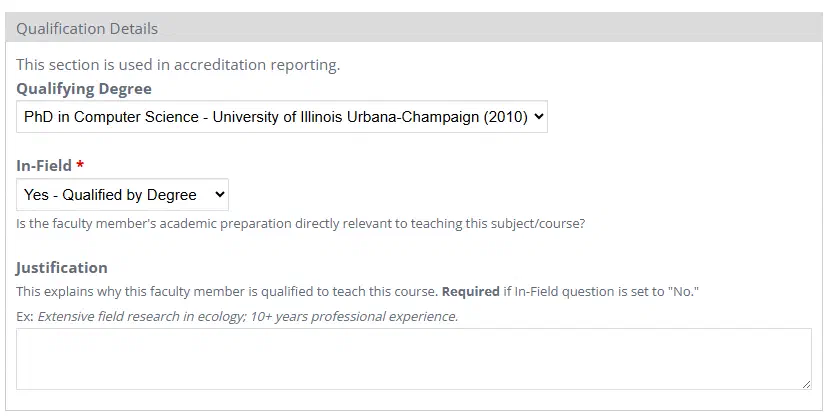
This creates a record that connects the faculty member, the course, their qualifications, and the reason they are considered qualified.
Turn That Information Into a Report
Once the information is maintained, administrators can generate a Faculty Qualifications Report and select the departments, faculty members, and time ranges they need.
The report includes:
- Faculty member
- Course and course title
- Qualifying degree
- Degree-granting institution
- Year the degree was earned
- In-field status
- Qualification status
- Justification for qualifications by exception
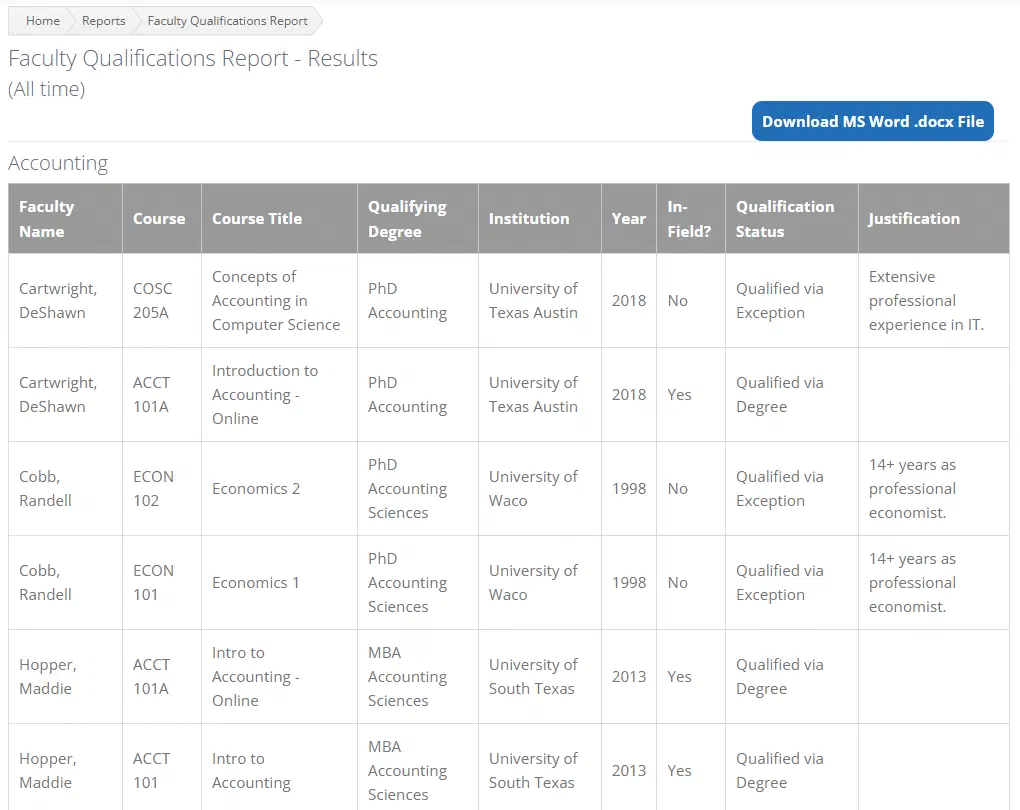
The result is a report that brings together information that might otherwise have to be collected from several different sources.
Make Accreditation Reporting an Ongoing Process
This approach eliminates the need to begin every accreditation cycle with a large data-collection project.
Faculty members maintain their information as part of their normal activity reporting process. They enter or import courses as they teach them and add qualification details while the information is current.
Then, when an accreditation report is needed, administrators work from information that has already been collected and organized.
This is one reason faculty activity reporting supports accreditation. The value is not simply having more faculty information. It is having information that can be retrieved and used for specific institutional purposes.
Use Faculty Data Beyond Accreditation
Faculty activity data can be useful for much more than a single accreditation report. The same information supports annual reports, public faculty profiles, program reviews, and other institutional reporting.
Faculty Atlas includes the Faculty Qualifications Report by default, and institutions can add and customize additional reports to meet their specific needs.
Institutions maintain faculty information once and use it in multiple ways. Faculty reporting software can provide the tools to make that information useful after it has been collected.
Give HR and Academic Administrators Better Access to Faculty Data
When faculty activities and course information are connected to institutional systems, faculty data becomes a shared resource for HR, academic affairs, and other administrators.
Faculty Atlas moves accreditation reporting from a reactive process, where someone has to gather information for every review, to an ongoing process where the information is already available.
Learn more about Faculty Atlas or schedule a personalized demonstration.